
How an ALTA Survey Helps Buyers Review Access Before a Waterfront Closing
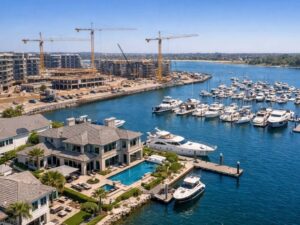
An ALTA survey before a waterfront closing should be the first thing on your list. Access to water sounds simple. You own the property. The water is right there. But the legal right to use that water, dock a vessel, or build a pier is a separate question. It doesn’t always come with the deed.
Understanding what ALTA surveys document is the key to avoiding closing surprises.
Waterfront properties carry layers of recorded restrictions and easements. An ALTA survey maps all of it before closing. Buyers see exactly what they’re getting and what they’re not.
Physical Access and Legal Access Are Not the Same Thing
Standing at the edge of a canal doesn’t tell you anything about your legal right to use it. Physical proximity and legal access are two different things.
Florida gives waterfront property owners certain rights tied to their parcel’s contact with navigable water. But those rights can be limited. An easement recorded years ago can let other people walk across what looks like your private waterfront. An ALTA survey finds those conditions and puts them on the map.
What an ALTA Survey Documents at the Water’s Edge
Where Your Property Actually Ends
In Florida, the mean high-water line is generally the boundary between private property and state-owned submerged land. That line shifts with tidal changes. An ALTA survey locates it and ties it to your parcel boundary.
This matters if you’re planning a dock, seawall, or boat lift. If the survey shows your parcel doesn’t reach the water’s edge, your plans need to change before you close.
Easements Running Along or Across the Property
Waterfront parcels often carry easements that run along the shoreline or cut across the property from a road to the water. These may be held by neighbors, utility companies, or the government.
An ALTA survey shows where those easements sit, how wide they are, and who holds them. A 20-foot public access easement along the waterfront edge isn’t just a legal detail. It limits where you can build and what the parcel actually delivers.
Encroachments From Next Door
Docks, seawalls, and fences from neighboring parcels sometimes cross property lines. An ALTA survey catches that before closing.
An encroachment found after closing is your problem to fix. Found during due diligence, it’s a negotiating point with the seller.
Table A Items Waterfront Buyers Should Request
An ALTA survey follows national standards set by the American Land Title Association and the National Society of Professional Surveyors. The base survey covers boundaries, easements, and structures. Optional items called Table A items let buyers request more specific data.
For waterfront closings, these matter most:
- Item 1: Corner monuments placed or found at the water’s edge
- Item 6: Zoning classification and setback requirements for waterfront structures
- Item 11: Utility locations, including buried lines near the shoreline
- Item 19: Wetland locations that can affect what’s buildable near the water
Skipping relevant Table A items means you get a less complete picture. That gap tends to appear during permitting.
What Happens When Access Issues Show Up After Closing
Waterfront development in Florida needs permits from multiple agencies. The Florida Department of Environmental Protection reviews dock and seawall permits. The Army Corps of Engineers covers structures near navigable waters. Local municipalities add their own requirements.
All of them look at the same question: does the buyer have legal access to the area where the structure is planned?
If a public access easement runs along the waterfront and no ALTA survey was done, a private dock permit can get denied. At that point, you own a waterfront property you can’t develop as planned. Fixing it takes time, money, and sometimes litigation.
Lenders Ask for It Anyway on Commercial Deals
For commercial acquisitions, lenders typically require an ALTA survey before issuing a loan. Title insurers use it to remove the standard survey exception from the policy. Without the survey, the title policy excludes coverage for issues a survey would have revealed.
Buyers who skip the ALTA survey often find out during underwriting that they need one anyway. That’s the worst time to discover a problem. Getting the survey done early in due diligence leaves room to act on what it finds.
Why Waterfront ALTA Surveys Take More Time
Waterfront surveys involve more work than inland parcels. The surveyor must locate the mean high-water line, research riparian rights, and reconcile the physical shoreline with the legal boundary in the deed. Structures in or near the water need to be mapped too.
Plan for a longer turnaround. Order the survey at the start of due diligence, not the end. If results come back with questions, you need time to answer them before closing.
Frequently Asked Questions
Does an ALTA survey cover submerged land?
An ALTA survey covers the upland parcel and locates the boundary at the water’s edge. Submerged lands in Florida are generally owned by the state. The survey shows where private ownership ends. Separate permits are needed for any structures placed over submerged land.
How is an ALTA survey different from a standard boundary survey for waterfront property?
A boundary survey locates property lines and documents the parcel. An ALTA survey does that plus title research, maps all recorded easements, and allows for optional Table A items. For commercial waterfront closings, lenders and title companies require an ALTA survey.
How does a public access easement affect my waterfront property?
A public access easement gives others the legal right to use that strip of land. You can’t build on it or block access to it. An ALTA survey shows exactly where it runs. Buyers see how much of the shoreline is actually private before they close.
Can an ALTA survey help with a neighboring dock that crosses my property line?
Yes. The survey documents all structures on and near the parcel, including anything from adjacent properties that crosses the line. That gives buyers legal standing to raise the encroachment with the seller before closing, or address it after if it was priced into the deal.
For a free land surveying quote, call us at (954) 250-5780 or send us a message by going here.