
How a Perc Test Can Change the Price of Vacant Land
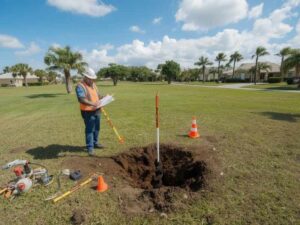
A vacant lot can look perfect on paper and still fail the one test that decides whether you can build a septic system on it. A perc test measures how fast water drains through soil, and the results can shift a land deal’s price by tens of thousands of dollars before anyone breaks ground.
For developers eyeing raw land here, this test often gets ordered too late, after a price has already been agreed on.
A perc test tells you if the soil can handle a septic system. Bad results can shrink your buildable area, add engineering costs, or kill the deal outright. Order one before you finalize a price, not after.
What a Perc Test Actually Measures
A percolation test, or perc test, checks how quickly water soaks into the soil at a specific depth. This matters most on lots without access to a city sewer line, where a septic system is the only option for handling wastewater.
The test involves digging a hole to a set depth, filling it with water, and timing how fast the water level drops. Slow drainage means the soil struggles to handle wastewater. Fast, even drainage usually means a standard septic system will work fine.
Why This Test Can Shift the Price of Land
Land value assumes the lot can support whatever the buyer plans to build. A failed or marginal perc test changes that assumption fast.
Here’s how it plays out in practice:
- A failed test on a residential lot can mean the buyer needs a more expensive engineered septic system, cutting into the budget for the actual build
- A marginal result might limit how many bedrooms a home can have, since septic capacity often ties directly to bedroom count
- On larger parcels, poor soil in one section can shrink the usable building envelope, lowering what the land is actually worth per buildable acre
A seller listing land at a price based on full buildability, without disclosing a known perc issue, is setting up a negotiation problem down the line.
Soil Types That Commonly Cause Problems
Fort Lauderdale sits on a mix of soil conditions, and not all of them handle septic systems well.
Common trouble spots include:
- Areas with high water tables, common near canals and low-lying lots
- Compact clay soils that drain too slowly
- Sandy soils so loose that water drains too fast, which can also cause a failed test in the opposite direction
Either extreme, too slow or too fast, can trigger a failed result depending on the local health department’s standards.
When to Order a Perc Test in the Buying Process
Timing matters. Order the perc test too late and you’ve already committed to a price without knowing if the lot can support your plans.
A good sequence looks like this:
- Get the offer accepted with a contingency for soil and perc testing
- Schedule the perc test during your due diligence period
- Review results before your contingency period expires
- Renegotiate price or exit the deal if the results come back unfavorable
Skipping the contingency entirely removes your ability to walk away or renegotiate if the soil doesn’t cooperate.
What Happens If the Land Fails
A failed perc test does not always mean the land is unbuildable. It usually means the standard, cheaper septic option is off the table.
Options after a failed test can include:
- Installing an engineered or alternative septic system, which costs significantly more than a standard system
- Reducing the planned bedroom count or unit density to match a smaller septic capacity
- Connecting to a nearby sewer line if one is available, though this often comes with its own hookup costs
- Walking away from the deal if none of the above make financial sense
Each of these options changes the math on what the land is actually worth to you as a buyer.
How Perc Test Results Affect Negotiation
A perc test gives you leverage, not just information. If a seller listed the land assuming a standard septic system and the test shows otherwise, that’s a legitimate reason to renegotiate price.
Bring the actual test results to the table, not just a general concern. A specific, documented result carries more weight than a vague statement about “soil concerns.”
Questions to Ask Before You Order One
- How many test locations does the county require for a lot this size?
- How long do results typically take to come back?
- Does the local health department require a specific minimum drainage rate to pass?
- If the test fails, what alternative septic options are realistic for this lot?
- Will the results affect the buildable square footage or unit count I’m planning?
Frequently Asked Questions
How long does a perc test take to complete?
The field testing itself usually takes a few hours, but full results, including any required paperwork, can take anywhere from a few days to a couple of weeks, depending on the county’s review process.
Can a failed perc test be appealed or retested?
Yes. In many cases, a retest at a different depth or location on the same lot is possible, though this depends on local health department requirements and the property’s soil conditions.
Does every vacant lot need a perc test?
No. Only lots that will rely on a septic system need a perc test. Properties connected to a city or county sewer system typically do not require one.
How much does a perc test typically cost?
Costs vary based on the size of the lot and the number of test locations needed, but the expense is generally small compared to discovering septic issues after purchasing the property.
Can I use a neighboring lot’s perc test results for my own property?
No. Soil conditions can vary significantly, even between neighboring lots, so each property requires its own perc test to provide accurate and reliable results.
For a free land surveying quote, call us at (954) 250-5780 or send us a message by going here.
Posted in land surveying, land surveyor | Tagged Percolation Test