
Building a Fence? Here’s When to Hire a Licensed Surveyor
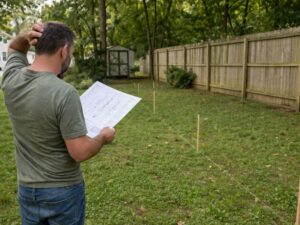
A Fence Project Can Go Wrong Before Construction Starts
Many homeowners think fence installation is simple. Pick the material, hire a contractor, and start digging. Still, property line problems often appear once the work begins.
A licensed surveyor uses a property boundary survey to confirm the true property line before fence construction starts. That step helps prevent neighbor disputes, fence removal costs, permit delays, and placement mistakes. It also gives contractors accurate measurements before installing posts or panels.
A new fence can improve privacy, security, and curb appeal. It can also create expensive problems when property lines are unclear.
Many homeowners trust an old fence line or a rough estimate from a previous owner. Others rely on online maps or visual markers in the yard. Those shortcuts cause problems all the time.
A licensed surveyor helps confirm where the legal boundary sits before contractors begin work. That step can save homeowners from major stress later.
Old Fence Lines Are Not Always Correct
Why do fence lines often end up in the wrong location?
Many fences were built years ago without a proper property survey. A fence may look correct for decades while sitting several feet off the real boundary line. Replacing that fence without checking the property line can create disputes with neighbors.
A fence standing for years does not prove it sits in the correct location.
Many older fences went up without a proper property boundary survey, which is why boundary disputes still happen today.
Problems usually appear once someone installs a new fence or replaces an older one.
A neighbor may suddenly question the location. Another neighbor may hire their own contractor and discover the fence crosses onto their property.
A licensed surveyor reviews property records, checks existing markers, and measures the boundary correctly before construction starts.
That process helps homeowners avoid expensive mistakes before materials arrive on-site.
Trees and Hedges Can Mislead Homeowners
Can landscaping features show the real property line?
Trees, hedges, retaining walls, and old chain-link fences rarely prove the true boundary line. Many homeowners assume those features mark the edge of the property, but they often sit inside or outside the legal lot line.
Many homeowners use visual clues to guess the property boundary.
A row of hedges may appear to divide two lots evenly. An old retaining wall may seem like the natural property edge. Even a worn fence can look permanent enough to trust.
Those assumptions create problems.
A licensed surveyor does not rely on appearance alone. Surveyors use recorded plats, legal descriptions, and physical boundary evidence to confirm the correct line.
That matters because many properties are not perfect rectangles. Some angle inward slightly. Others shift direction near corners or sidewalks.
A small mistake near the front yard can turn into a much larger problem near the back fence line.
Fence Disputes Become Expensive Quickly
What happens if a fence crosses the property line?
A fence built across the property line may need removal or relocation. Homeowners may also face legal disputes, contractor delays, and additional labor costs. A licensed surveyor helps reduce that risk by confirming accurate boundary locations before construction begins.
Fence disputes become personal fast.
One homeowner may spend thousands on a privacy fence. Then a neighbor claims the fence sits on their property. Contractors may need to remove panels, dig up posts, and rebuild sections entirely.
That mistake costs time and money.
A licensed surveyor helps prevent those situations before installation starts. Clear property measurements help both homeowners and contractors follow the correct layout during construction.
Some cities also require property information before issuing permits for certain fence projects. A survey can help avoid delays there too.
Corner Lots and Sloped Yards Need Extra Planning
Why are corner lots harder for fence construction?
Corner lots often follow different setback rules than standard residential lots. Sloped yards also make fence alignment harder because the ground elevation changes across the property.
Not every yard follows a simple layout.
Corner lots often create confusion because fence setback rules may change along sidewalks or roadways. Some homeowners build too close to the street without realizing it.
Sloped land creates another issue.
A fence may appear straight while slowly drifting away from the actual property line underneath the grade change. That mistake becomes harder to fix once the fence installation finishes.
A licensed surveyor checks the full layout before construction begins. That step helps prevent placement errors and code violations.
Older Surveys May No Longer Match Current Conditions
Should homeowners rely on an old property survey?
Older surveys may not reflect current site conditions. Additions, landscaping changes, utility work, or new easements can affect the property layout over time. A licensed surveyor checks existing conditions before fence construction starts.
Some homeowners already have a survey from years ago. That document may still help, but property conditions can change over time.
Previous owners may have added sheds, pools, retaining walls, or landscaping features. Utility companies may also install new easements across sections of the property.
Fence contractors work with current site conditions, not old assumptions.
A licensed surveyor checks the property as it exists today. That information helps homeowners avoid surprises during construction.
Updated measurements also help if neighbors question the fence location later.
DIY Fence Projects Carry More Risk
Can homeowners install a fence without a survey?
Homeowners can install fences themselves, but guessing property boundaries creates major risk. Online maps and tape measurements do not provide legal boundary locations. A licensed surveyor gives accurate measurements before construction starts.
DIY fence projects look easy online. Real property lines are rarely that simple.
Many homeowners measure the yard themselves and assume the numbers are accurate enough. Others rely on satellite maps or phone apps during planning.
Those tools help with rough estimates, but they do not replace a legal property survey.
Small measuring mistakes become larger over long fence runs. One incorrect corner can throw off the entire project.
A licensed surveyor uses professional equipment and legal boundary data to confirm accurate property lines before installation starts.
Fence Projects Go Smoother With Accurate Property Lines
Fence projects often fail because homeowners rush the planning stage.
Many people focus on materials, gate styles, and fence height first. Then they check the property line later. That order creates unnecessary risk.
Hiring a licensed surveyor before construction helps reduce disputes, delays, and rebuild costs. It also gives contractors a clear layout before digging begins.
A fence should improve a property, not create problems with the neighbor next door.
The best fence projects usually start with accurate property boundaries from the beginning.
A licensed surveyor helps homeowners avoid boundary mistakes before they turn into expensive problems. That step gives contractors a clear layout, helps prevent disputes with neighbors, and keeps the project moving in the right direction.
Fence installation may look simple at first. Still, one small property line mistake can create delays, removal costs, and legal trouble later. Checking the boundary before construction starts gives homeowners peace of mind and helps the entire project go more smoothly from day one.
For a free land surveying quote, call us at (954) 250-5780 or send us a message by going here.
Posted in land surveying, land surveyor | Tagged Land surveying, land surveyor